

Reading Time: 3 minutos
Key Takeaways:
- Most skin cancers are caused by UV radiation, and the damage builds up silently over years of small, unnoticed exposures.
- Basal cell, squamous cell, and melanoma are the three main types of skin cancer, each with different signs worth recognizing.
- Broad-spectrum SPF 30+ used daily and reapplied every two hours is one of the most effective protective habits you can build.
- An annual check-up with your primary care physician helps catch changes early and keeps your long-term prevention on track.
The sun has a way of making everything feel harmless. Long days, beach plans, that warm afternoon glow that turns even the most ordinary moment into a memory. But the very thing that makes summer feel so good is also what’s quietly causing the most damage to your skin, slowly, invisibly, and almost always without warning.
That’s exactly why UV Safety Month exists. Not to scare anyone away from the sun, but to make sure the years you spend enjoying it don’t show up later as something far more serious. To understand why protection matters so much, it helps to understand what we’re actually protecting against, because ultraviolet radiation isn’t a single threat, and it doesn’t behave the way most people assume.
The hidden power of UV rays
Sunlight isn’t just bright; it’s a powerful mixture of invisible radiation wavelengths. The danger doesn’t sleep when the clouds come out, and it easily penetrates your car windows during your morning commute.
- UVA rays: These rays penetrate deep into the dermis. They destroy collagen, leading to premature wrinkles, sagging, and dark spots. They remain at a constant, intense strength all day long, 365 days a year.
- UVB rays: These rays attack the surface of your skin, causing painful sunburns. More importantly, they are the primary driver of skin cancer. They peak between 10 a.m. and 4 p.m. and bounce violently off water, sand, and concrete.
According to data from the Centers for Disease Control and Prevention (CDC), the worst damage doesn’t happen during a single tropical vacation. It happens during the ordinary moments you ignore: driving to work, walking the dog, or sitting by a window.
The three types of skin cancer
Skin cancer is the most common cancer in the United States, but it doesn’t look the same on everyone. Spotting the early warning signs drastically changes your prognosis.
- Basal Cell Carcinoma (BCC)
The most frequent diagnosis. It usually manifests as a smooth, pearly bump, a flat scar-like patch, or a stubborn sore that bleeds and refuses to heal. While it rarely spreads to distant organs, it will silently destroy local skin tissue and bone if left ignored.
- Squamous Cell Carcinoma (SCC)
The second most common type. It typically shows up on heavily sun-exposed areas like your ears, face, lips, and hands. Look for rough, scaly red patches or raised, wart-like growths. SCC is aggressive and can migrate to deeper layers of tissue if skipped over.
- Melanoma
The rarest, yet most lethal form of skin cancer. It develops in pigment-producing cells and frequently arrives as a brand-new mole; or an old mole that suddenly shifts in size, shape, or color.
The Skin Cancer Foundation confirms that roughly 90 percent of nonmelanoma skin cancers are directly linked to UV radiation. The math is simple: cumulative exposure creates the cellular mutations. But that also means prevention is entirely within your control.
And there’s another reason prevention pays off so powerfully. According to the American Academy of Dermatology, the five-year survival rate for people whose melanoma is detected and treated before it spreads to the lymph nodes is 99 percent (AAD). That number changes the entire conversation. It means early detection isn’t just a backup, it’s the prevention plan working at its best. Spotting a changing mole, an unusual spot, or a sore that won’t heal in time can be the difference between a simple treatment and a serious diagnosis.
That’s why real prevention works on two levels at once: blocking new damage with your daily habits, and catching the signs of past damage before they grow into something bigger. Your summer routine should do both.
Your summer skin protection plan
Real protection doesn’t require a complex, luxury routine. It requires relentless consistency. Here is how to shield your skin effectively this summer:
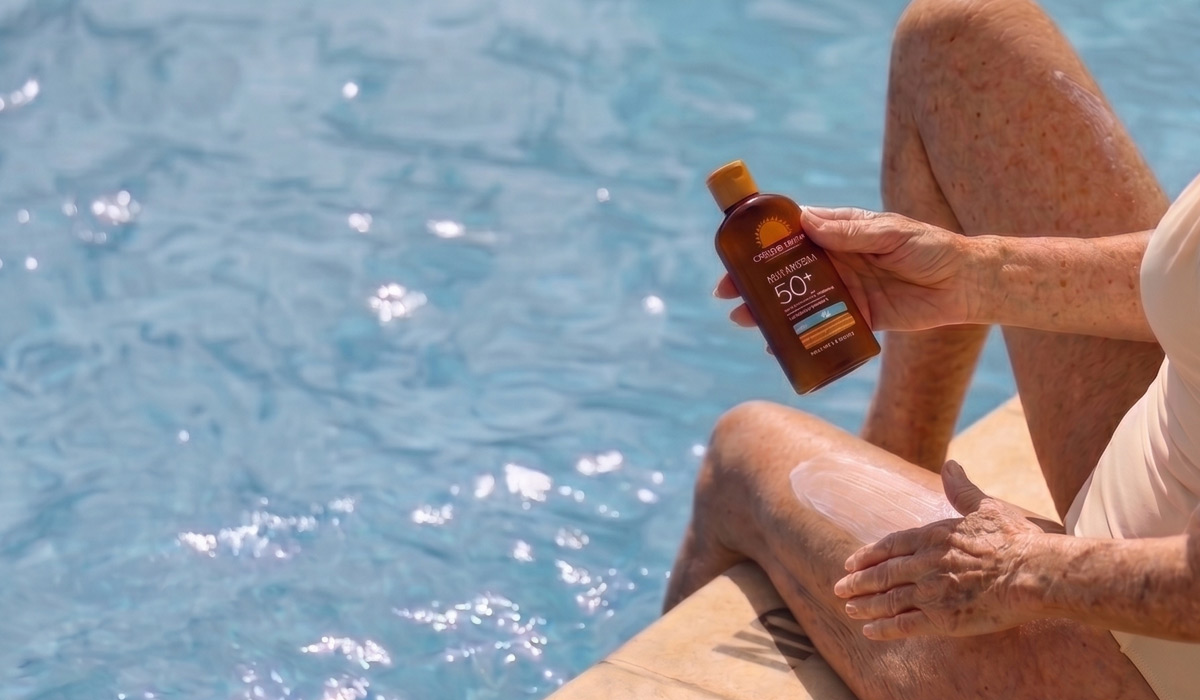
- Make SPF 30+ your daily baseline: Apply broad-spectrum protection every single morning. If you are spending the day outdoors or in the water, upgrade to water-resistant SPF 50.
- Obey the two-hour rule: Sunscreen degrades. A single application at 8:00 a.m. will not protect you at lunchtime. Reapply every two hours, especially after sweating or swimming.
- Block what sunscreen misses: Put on a wide-brimmed hat to protect your scalp, ears, and neck. Wear UV-blocking sunglasses to shield your eyes from cataracts and protect the delicate skin around your eyelids.
- Schedule regular medical screenings: While self-exams are helpful, they cannot replace professional expertise. Visit your primary care physician or a dermatologist regularly for comprehensive skin checks. A trained medical eye can spot hidden anomalies, microscopic cellular changes, or precancerous spots long before they become dangerous.
A healthy summer isn’t about avoiding the sunshine; it’s about making protection your default setting rather than an afterthought. Your skin remembers every exposure, but you have the power to change what happens next by making proactive healthcare a priority.
At Central Florida Total Healthcare, we believe prevention is the most powerful tool you have. That’s why we make it easy to stay ahead of the small risks before they turn into big ones.
Call us at (407) 392-1919 to schedule your regular checkup, and let our medical team help you protect your long-term health.